
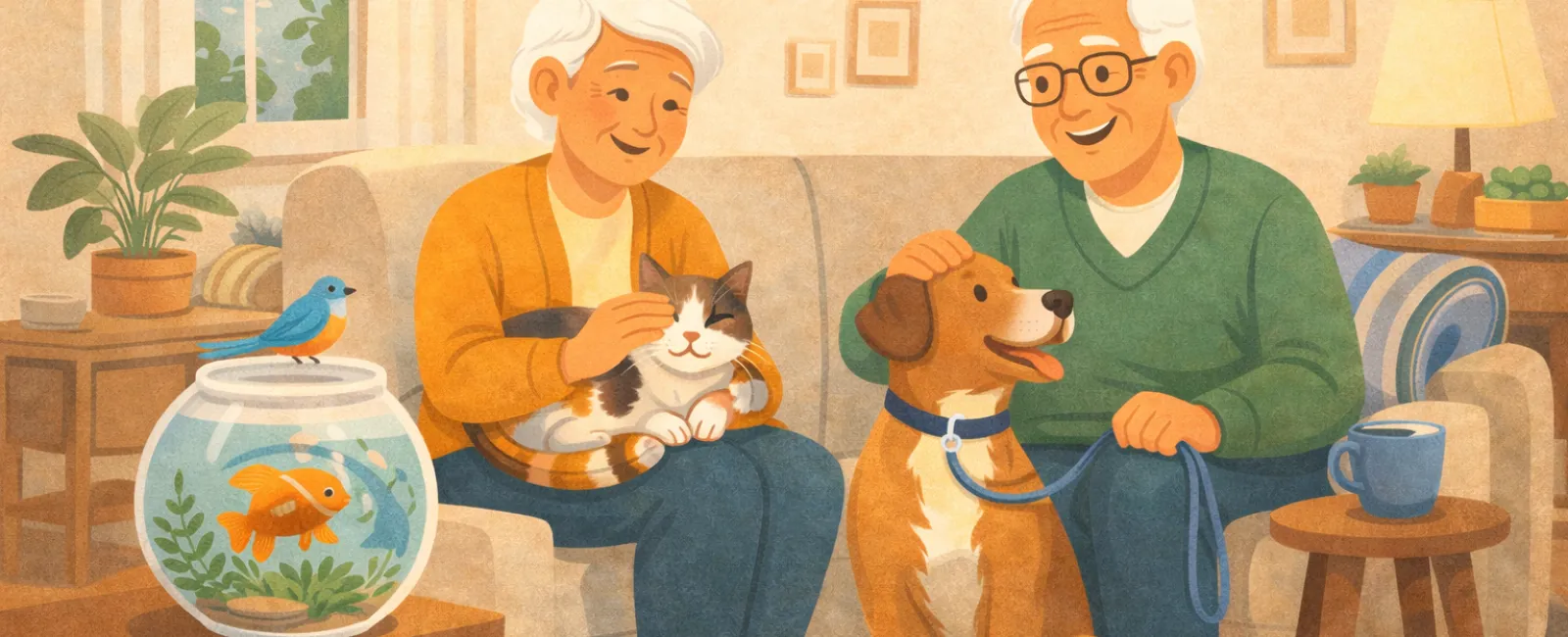
Pets and Seniors: Benefits, Considerations, and How to Decide If a Pet Is Right for Your Loved One
Whether it's a wagging tail, a purring lap buddy, or even a chirping bird, pets can bring a lot of warmth into our lives. But when you're caring for an aging parent or loved one, there's a bigger conversation that often comes up: are pets genuinely beneficial for seniors?
Research and real-world experience both show that animals can enrich the later years in a bunch of meaningful ways, but they're not always the perfect fit for everyone. Today, we'll walk through the benefits, potential drawbacks, and key things to consider before welcoming a pet into your loved one's home. We'll cover physical, emotional, and social effects, what different pets can offer, and how to make a smart choice that keeps both your senior and the animal happy and safe.
Table of Contents
- Benefits of Pets for Seniors
- Types of Pets and What They Offer
- Pros and Cons of Pet Ownership
- How to Match a Pet to Your Loved One
- Alternatives if Full Ownership Isn't Right
- Benefits vs Challenges — At a Glance
- Frequently Asked Questions
Benefits of Pets for Seniors
Having a pet isn't just about cute photos or cuddles. A growing body of research suggests that animals can have real, measurable effects on older adults' well-being.
One of the most consistent findings across multiple studies is that pets help reduce loneliness and isolation, which are common challenges as people age. Just interacting with animals can uplift mood and provide emotional support, especially for seniors who live alone or have limited social contact. Pets also offer companionship without judgment. Something that's especially meaningful during quiet moments or stressful times.
Physically, pets can also help. Walking a dog encourages regular activity, which supports cardiovascular health, muscle strength, and balance. Even activities like playing with a cat or brushing a pet provide light exercise and boost movement. Evidence also shows that pets can help lower stress hormones like cortisol and reduce blood pressure, potentially protecting heart health over time.
There's even research suggesting that pet ownership may slow cognitive decline. One study found that older adults who've owned pets long-term performed better on memory and other cognitive tests than those without pets.
That combination of emotional comfort, physical activity, and mental engagement adds up to real quality-of-life benefits that many seniors and families swear by.
Types of Pets and What They Offer
Not all pets are created equal when it comes to the senior experience. Here's a quick look at what different animals can bring to the table:
Dogs
Dogs are often the top choice for older adults because they require walks, routine, and interaction. That encourages physical activity and often sparks social interaction with neighbors or other dog owners. Many seniors find that walking a dog gives them a purpose and a reason to get outside regularly.
Cats
Cats may not need daily walks, but they still offer companionship, comfort, and structured care like feeding and grooming. Their calming presence and purring can reduce stress and provide emotional comfort, especially for seniors who prefer quieter, indoor animals.
Small Animals (Birds, Fish, Hamsters)
Smaller animals can be lower maintenance and still offer joy and companionship. However, research suggests that pets requiring less direct interaction, like fish, may not provide the same cognitive benefits as dogs or cats, though they can still add life to a space.
Therapy and Companion Animals
Not every interaction needs to involve full pet ownership. Therapy animals (think dogs, cats, or even trained small animals that visit homes or community centers) can offer many of the benefits of companionship without the long-term commitment of owning a pet.
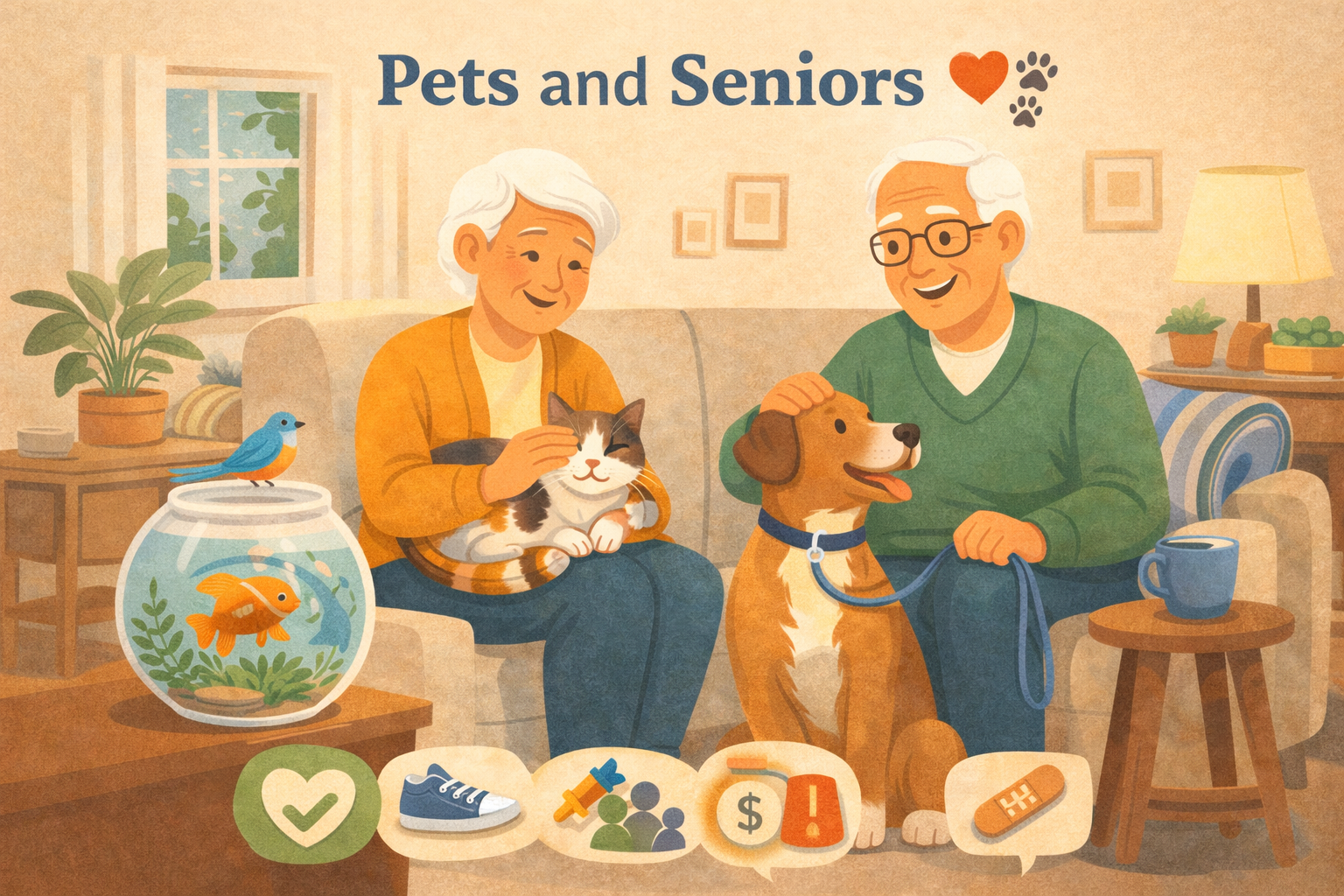
Pros and Cons of Pet Ownership
Before you jump into pet adoption, it's smart to weigh both sides. For some seniors, the benefits far outweigh the challenges. For others, certain concerns can make pet ownership less practical.
Pros
- Companionship and emotional support — Pets can reduce loneliness and bring joy into daily life.
- Increased physical activity — Dogs encourage movement and regular exercise.
- Lower stress and improved heart health — Studies suggest pets can help lower blood pressure and stress hormones.
- Social connections — Walking a pet or chatting about pets can spark conversation and build community.
- Routine and purpose — Caring for a pet adds structure and meaning to the day.
Cons
- Responsibility and physical demand — Pets need feeding, grooming, and care, which may be hard for some seniors.
- Fall risk — Animals underfoot can cause trips or slips if not managed carefully.
- Cost — Vet visits, food, and supplies add up, and unexpected health issues can strain a budget.
- Travel and care gaps — Pets make travel or time away harder, and some seniors worry about what happens to their pet if they can't care for them.
- Allergies or hygiene concerns — Some animals carry allergens or require cleanup that may be difficult for some older adults.
How to Match a Pet to Your Loved One
If you're thinking pets might be a good fit, consider these questions:
- How active is your loved one? A high-energy dog might be great for someone who still loves walks, but a quiet cat might be better for someone who prefers calm indoor time.
- Does your loved one have mobility or balance issues? Bigger, stronger animals might pose a fall risk.
- Is pet care affordable? Vet visits, food, and supplies add up over time.
- Do they want a long-term commitment? Pets can live many years, and that's part of the deal.
Matching a pet to personality, lifestyle, and capacity helps ensure both the senior and the animal thrive together.
Alternatives if Full Ownership Isn't Right
Not every senior needs or wants their own pet full-time. If full ownership feels like too much right now, consider:
- Pet therapy visits or animal-assisted visits
- Pet-sitting or fostering for short periods
- Volunteering at a nearby shelter with a caregiver or family member
These options still give interaction and joy without the responsibility of full ownership.
Our Caregivers Can Help Care For Pets
Pets can be a wonderful addition to a senior's life, but they don't have to carry the full weight of companionship or daily responsibility. At 4 Seasons Home Care, our caregivers often help bridge that gap. That might look like helping your loved one feed the dog, walk them safely, clean up litter boxes, or simply make sure pet routines don't become stressful or overwhelming. For many seniors, having support around pet care is what makes keeping a beloved animal possible in the first place.
Providing Companion Care Across Atlanta
And if bringing a pet into the home just isn't the right fit, that doesn't mean your loved one has to miss out on connection. Our caregivers provide companionship care that's steady, familiar, and deeply personal. From conversation over coffee, to shared routines, to simply being present, that kind of human connection matters just as much. Whether your loved one finds joy in caring for a pet or prefers quiet company and friendship, we're here to help make life at home feel full, supported, and not lonely.
If you're thinking through what the next season of care looks like, we're always happy to talk it through with you.
Benefits vs Challenges — At a Glance
| Factor | Benefits | Challenges |
|---|---|---|
| Emotional | Companionship, reduced loneliness | Attachment concerns if travel or care gaps arise |
| Physical | More activity, better heart health | Mobility demands, fall risk |
| Social | Increased interaction, community ties | Care responsibility may limit outings |
| Financial | Purpose and routine | Veterinary and upkeep costs |
Frequently Asked Questions
Do pets actually help with loneliness in seniors?
Yes. Research shows pets can reduce feelings of loneliness and provide emotional support, especially for older adults living alone.
What type of pet is best for an older adult?
It depends on lifestyle. Dogs offer exercise and social interaction; cats offer calm companionship with less maintenance; small animals or therapy visits can bring joy with minimal demand.
Are there health benefits beyond feelings of joy?
Studies suggest owning a pet can help lower blood pressure, reduce stress, and even slow cognitive decline in older adults.
What are real risks to consider?
Care responsibilities, fall risk, pet costs, and travel limitations are all things families should think through before adopting.
Can seniors with dementia have pets?
They can, but it depends on the individual's abilities. A low-maintenance animal or supervised interaction might be better than full ownership. Some therapy animal programs offer great alternatives.