
Caring for a Loved One with Parkinson's at Home
Parkinson's changes things slowly, then all at once. One day it's a slight tremor or stiffness. A few years later, daily routines take more time, more patience, and more planning than you ever expected.
If you're caring for a parent, spouse, or loved one with Parkinson's at home, you're not alone. Many families are walking this road quietly, trying to balance safety, dignity, independence, and their own emotional limits. Our team at 4 Seasons Home Care is here to help you understand what Parkinson's care at home really looks like, what to expect as symptoms change, and how to support your loved one without burning yourself out
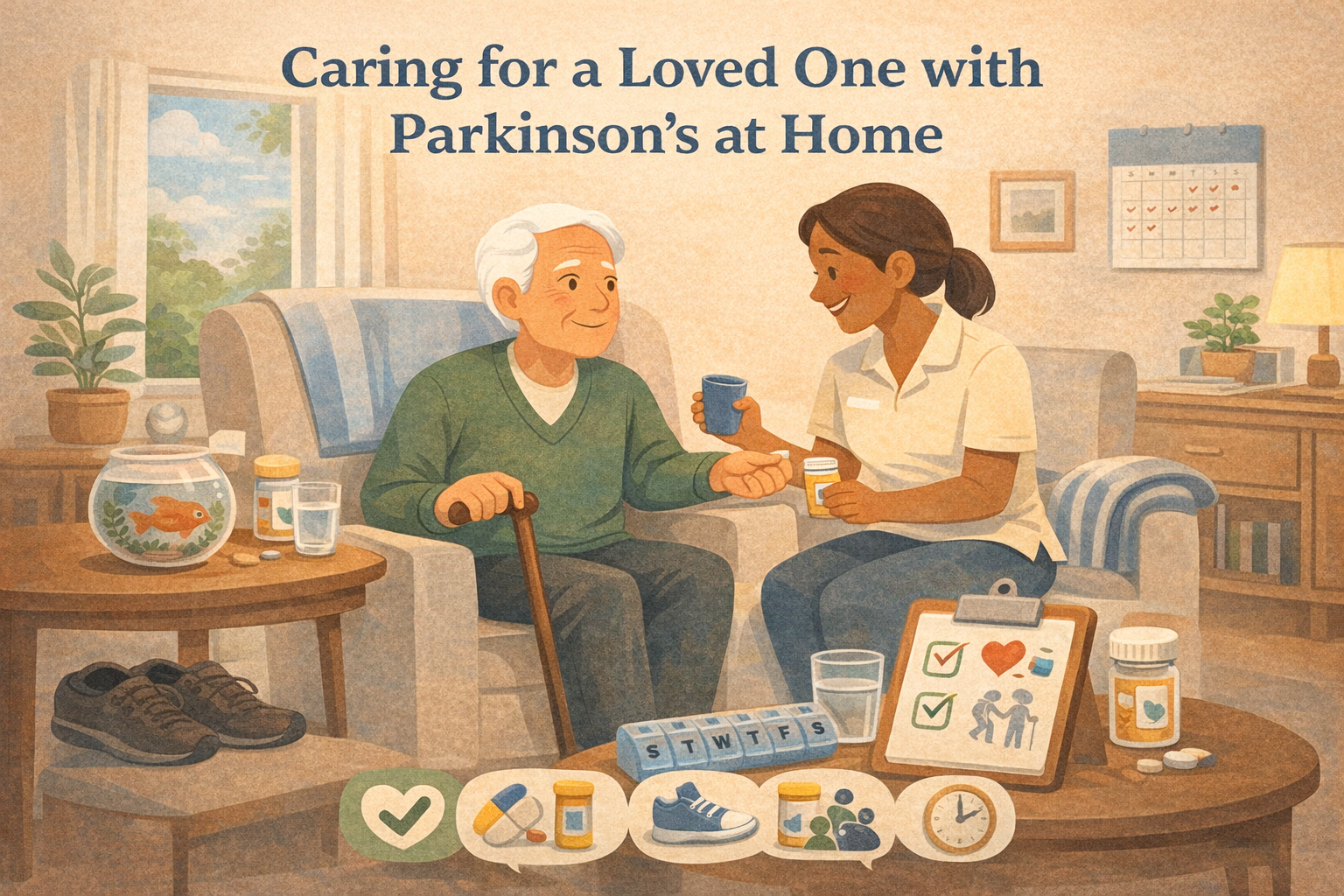
Table of Contents
- Understanding Parkinson's disease
- What daily life with Parkinson's can look like
- Making the home safer and easier to navigate
- Common caregiving tasks for Parkinson's at home
- The emotional side of caregiving
- Parkinson's symptoms and how care needs change
- When home care support makes sense
- Frequently Asked Questions
Understanding Parkinson's disease - What Exactly Is It?
Parkinson's disease is a progressive neurological condition that affects movement, balance, and coordination. It happens when the brain stops producing enough dopamine, a chemical that helps control smooth, intentional movement.
Most people associate Parkinson's with tremors, but the condition goes far beyond shaking hands. Parkinson's can affect walking, posture, speech, facial expression, sleep, digestion, and even mood and memory. Symptoms tend to progress gradually, which can make it tricky for families to recognize when more support is needed.
There's no cure for Parkinson's, but many people live meaningful, full lives for years with the right combination of medication, routine, and support. Home plays a huge role in that equation.
What daily life with Parkinson's can look like
Parkinson's doesn't follow a straight line. Some days feel manageable. Others feel exhausting. Your loved one may move slowly, freeze mid-step, or struggle with simple tasks that used to be automatic, like buttoning a shirt or standing up from a chair.
One of the hardest parts for families is that Parkinson's symptoms often fluctuate throughout the day. Medications can wear off. Fatigue can hit suddenly. Stress can make symptoms worse. That unpredictability can make caregiving feel like a moving target.
Over time, tasks that once took a few minutes may take much longer. Rushing usually backfires. Building in extra time, calm cues, and consistent routines can make a big difference in how the day flows.
Making the home safer and easier to navigate
One of the most impactful things you can do early on is adjust the home environment. Small changes can reduce fall risk, frustration, and fatigue.
Clear walkways are key: Removing throw rugs, cords, and clutter helps reduce tripping hazards. Chairs with arms make standing easier. Grab bars in the bathroom can be a game changer. Good lighting, especially at night, helps with balance and orientation.
It also helps to think about how your loved one moves through the house. Are there tight spaces? Slippery floors? Areas where they tend to freeze or lose balance? Addressing those spots proactively can prevent injuries down the road.
Common caregiving tasks for Parkinson's at home
Caring for someone with Parkinson's is often less about doing things for them and more about supporting them while they do things themselves. Independence matters, even when it takes longer.
Daily care may include help with bathing, dressing, grooming, and toileting. Fine motor challenges can make buttons, zippers, and utensils frustrating. Choosing adaptive clothing and tools can preserve dignity while reducing stress.
Mobility support becomes more important as balance and coordination decline. This may involve steadying during transfers, walking assistance, or cueing techniques to help overcome freezing episodes.
Medication reminders are another major piece of Parkinson's care at home. Timing matters with Parkinson's medications, and missed or delayed doses can significantly affect mobility and comfort.
Meals and nutrition also deserve attention. Swallowing difficulties, slower chewing, and reduced appetite can appear over time. Calm meals, upright posture, and patience help make eating safer and more enjoyable.
The emotional side of caregiving
Parkinson's affects more than the body. Depression, anxiety, frustration, and apathy are common, both for the person with Parkinson's and for caregivers.
Your loved one may grieve the loss of independence or feel embarrassed by symptoms they can't control. You may feel sadness, guilt, or resentment, even while deeply loving them. All of that is normal.
Caregiving works best when emotional health is acknowledged, not ignored. Open conversations, realistic expectations, and outside support can prevent burnout and preserve relationships.
How Parkinson's symptoms and care needs often change
| Parkinson's Symptom | How It May Show Up | Ways Care at Home Can Help |
|---|---|---|
| Tremors and stiffness | Shaking hands, rigid muscles, slower movement | Extra time for tasks, adaptive tools, calm cueing |
| Balance and gait issues | Shuffling, freezing, frequent falls | Walking assistance, fall prevention, mobility support |
| Medication fluctuations | Symptoms worsen when meds wear off | Consistent medication reminders and monitoring |
| Speech and facial changes | Soft voice, reduced expression | Patience, encouragement, attentive listening |
| Cognitive and mood changes | Anxiety, depression, confusion | Companionship, routine, emotional reassurance |
When home care support makes sense
Many families start Parkinson's care on their own, then slowly realize they're stretched too thin. That doesn't mean you've failed. It means the disease has progressed.
Home care support can step in where things feel heavy. A caregiver can assist with personal care, mobility, medication reminders, meals, light housekeeping, and companionship. Just as importantly, they bring consistency and calm into the home.
At 4 Seasons Home Care, we understand that Parkinson's care isn't one-size-fits-all. Needs change. Energy changes. Some days are better than others. Our caregivers are trained to adapt, move at your loved one's pace, and protect dignity at every stage.
Frequently Asked Questions
Can someone with Parkinson's live at home safely?
Yes, many people with Parkinson's live safely at home for years with the right support, home setup, and routine. As symptoms progress, additional help often becomes necessary.
What kind of care does someone with Parkinson's need?
Care typically includes help with mobility, personal care, medication reminders, meal support, fall prevention, and companionship. Emotional support is just as important as physical care.
Is Parkinson's care considered medical or non-medical?
Most day-to-day Parkinson's support falls under non-medical home care. Medical care is handled by physicians and therapists, while caregivers help with daily living and safety.
How do I know when it's time to get help?
If you're feeling exhausted, worried about falls, struggling to manage medications, or noticing your loved one becoming isolated, it's often time to explore home care support.
How can 4 Seasons Home Care help with Parkinson's?
Our caregivers provide personalized, in-home support that adapts as Parkinson's progresses. We focus on safety, routine, dignity, and companionship so families don't have to navigate this journey alone.