
Stroke Care at Home in Atlanta: From a Home Care Team That's Lived It With Families
Most articles about stroke recovery start with a definition of what a stroke is. We're going to skip that part. If you're reading this, you already know more about strokes than you ever wanted to. What you probably don't know yet is what the next twelve months are actually going to feel like.
That's what this article is for.
We've sat with families on discharge day at Wellstar Kennestone, fielded the 11 p.m. phone calls from Northside, walked clients through their first transfer in the kitchen they've stood in for forty years. Stroke care at home is one of the most demanding and most beautiful things we do. It's also one of the most misunderstood. So we're going to walk you through the first year the way we'd walk through it with a family at the kitchen table. Honestly. Specifically. With the hard truths and the real hope.
What This Guide Covers
- First, Some Honest Truths About Stroke Recovery
- Day 1: The Hospital Discharge (The Most Important Day)
- The First Week Home: What to Expect and What to Watch
- The First 30 Days: The Most Common Mistakes Families Make
- How Care Needs Differ Based on the Stroke
- Months 2 and 3: The Plateau (and Why It Matters)
- Months 4 to 6: Rebuilding a New Normal
- Month 7 to Year 1: The Long View
- Where Professional Home Care Fits In
- Atlanta-Area Stroke Resources Worth Knowing
- Frequently Asked Questions
First, Some Honest Truths About Stroke Recovery
Before we get into the timeline, here's what no one tells you on discharge day.
Recovery is not linear. Your loved one will have a brilliant Tuesday and a terrible Wednesday with no obvious explanation. This is normal. The brain heals in fits and starts, not on a graph.
Recovery is lifelong. The biggest gains usually happen in the first three to six months, but improvement can continue for years. Plateaus are real, but plateaus are not endings.
Different strokes create different needs. A left-hemisphere stroke often affects language and right-side movement. A right-hemisphere stroke often affects spatial awareness and left-side movement. A brainstem stroke can affect swallowing, balance, and consciousness in ways that look nothing like a typical "stroke" presentation. The recovery roadmap depends entirely on which kind your loved one had.
Post-stroke depression is enormously common. Roughly one-third of stroke survivors develop clinical depression in the year following their stroke. This isn't a character flaw or a lack of gratitude. It's a direct neurochemical consequence of the brain injury itself. Treat it like any other post-stroke symptom.
One family caregiver is almost never enough. Not because you're not capable. Because the math doesn't work. Even modest post-stroke care needs require coverage that exceeds what one person can sustainably provide while also working, sleeping, and remaining human.
Day 1: The Hospital Discharge (The Most Important Day)
Picture this. It's a Thursday afternoon at Wellstar Kennestone. Your mom has been there for eight days. The neurologist signs off. The discharge planner hands you a packet of paperwork an inch thick. A nurse explains medications she's never been on before. Someone wheels her down to the lobby. Suddenly you're driving home with a person who needs help walking up the front steps and you have no idea what to do next.
This is the moment most stroke recoveries are either set up to succeed or set up to fail. Here's what actually matters in the first 24 hours.
Talk to the discharge planner before discharge, not after. Every Atlanta hospital, including Wellstar Kennestone, Northside, Emory, and Piedmont, has a discharge planning team. They can connect you with after-hospital home care, home health (skilled nursing), durable medical equipment, and outpatient therapy referrals. Engage them early. This is where our team coordinates directly with discharge planners to make sure after-hospital care is in place the same day, not three days later.
Set up the home before your loved one walks in. Remove throw rugs. Clear pathways. Move essential items to chair height. Put a phone within reach in every room. If you're expecting a wheelchair or walker, measure doorways now, not later.
Review the medication list with someone qualified. Post-stroke medication regimens often include blood thinners, blood pressure meds, statins, and sometimes anti-seizure or antidepressant medications. Mistakes here cause readmissions. A pharmacist consultation or a home health nurse visit in the first 48 hours is worth its weight in gold.
Know the signs of a second stroke. The risk of a recurrent stroke is highest in the first 90 days. Use the BE FAST acronym: Balance, Eyes, Face, Arm, Speech, Time. If any of these change suddenly, call 911. Not the doctor. 911.
The First Week Home: What to Expect and What to Watch
The first week is overwhelming for everyone. Your loved one is exhausted. You're exhausted. Things will go wrong. Here's what to expect.
Sleep will be disrupted. Stroke survivors often experience changes in their sleep-wake cycle. Daytime sleepiness, nighttime restlessness, and confusion during transitions are all normal. This is the period when families often realize they need overnight care, even if they didn't think they would.
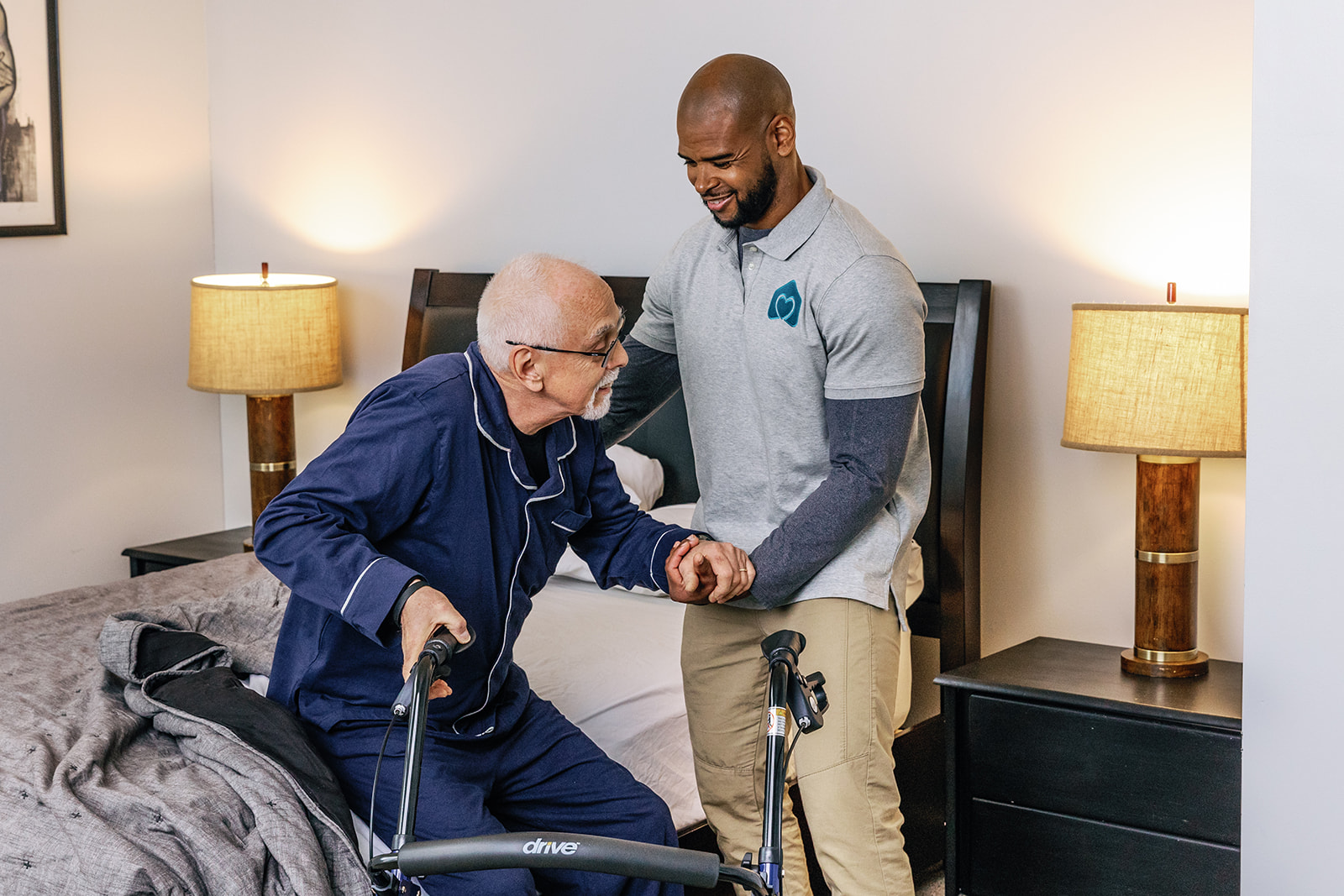
Falls are the biggest risk. Roughly 70% of stroke survivors fall within the first six months at home. Most of these falls happen during transfers, in the bathroom, or at night on the way to the toilet. Sit your loved one down for the first few transfers. Use a transfer belt if there's any weakness on one side. Don't try to do this alone if they can't bear their own weight. Personal care support for bathing and transfers cuts fall risk dramatically.
The emotional whiplash is real. Your loved one may be more emotional than usual. They may cry at small things. They may be irritable or withdrawn. They may laugh at moments that aren't funny. This is sometimes called pseudobulbar affect, and it's a direct result of the brain injury. It's not personal. It's not a sign they don't love you. It will usually settle down over the first few months.
Communication may be harder than expected. Even mild aphasia can make it hard for your loved one to find words, follow conversations, or read. Slow down. Use shorter sentences. Yes/no questions are easier than open-ended ones. Don't finish their sentences unless they ask you to.
The First 30 Days: The Most Common Mistakes Families Make
We've watched a lot of families go through this. Here are the most common stumbling blocks.
- Trying to do it all alone. The adult daughter who takes three weeks off work and tries to be everything. By week two, she hasn't slept. By week four, she's snapping at the parent she loves. You don't get extra credit for burning out.
- Skipping therapy appointments because of transportation. Outpatient PT, OT, and speech therapy are where the biggest recovery gains happen in the first 90 days. If you can't get your loved one there reliably, you've lost the window. Home care caregivers can drive to and from appointments, which is often the unlock.
- Missing the signs of post-stroke depression. Withdrawal, loss of interest in things they used to love, sleep changes, irritability, hopelessness. If you see this for more than two weeks, call the primary care doctor or neurologist. There are real treatments that work.
- Underestimating "just being there." The exhaustion of constant vigilance is different from the exhaustion of physical labor. You can be tired in your bones from doing very little except watching. This is real. Build in real breaks, even short ones.
- Not setting up backup. What's your plan if you get sick? If your kid has a school emergency? If you just need a Saturday off? Set this up in week one, not week three when you're already underwater. Respite care exists for a reason.
- Putting off the home modifications. Grab bars, raised toilet seat, shower chair, ramp if needed. These don't need to be permanent or expensive. But they need to happen now, not after the first fall.
How Care Needs Differ Based on the Stroke
Here's where most stroke care articles fall down. They treat "stroke" like one thing. It isn't. Different post-stroke effects require different kinds of help. Here's how that maps out in real life.
| Post-Stroke Effect | What It Looks Like at Home | What Helps |
|---|---|---|
| Hemiparesis (one-sided weakness) | Trouble walking, getting up from a chair, dressing, using one hand | Transfer assistance, fall prevention, adaptive equipment, help with bathing and dressing, mobility support during walks |
| Aphasia (language difficulty) | Trouble finding words, following conversations, reading, or writing | Patient communication, picture boards, simplified questions, speech therapy support, no finishing their sentences |
| Dysphagia (swallowing difficulty) | Coughing during meals, choking risk, weight loss, food avoidance | Modified diet, thickened liquids, upright positioning during meals, slow pacing, caregivers trained to recognize choking signs |
| Hemianopia (vision loss on one side) | Bumping into objects, missing food on one side of the plate, trouble reading | Environmental setup, food plate rotation, clear pathways, gentle reminders to scan to the affected side |
| Post-stroke depression | Withdrawal, hopelessness, loss of interest, irritability, sleep changes | Emotional support, gentle routine, monitoring for changes, communication with medical team, engagement in meaningful activity |
| Executive function changes | Trouble planning, forgetting steps, impulsivity, difficulty managing medications | Medication reminders, structured routine, reduced multitasking, simple step-by-step instructions, supervision for complex tasks |
| Cognitive changes / confusion | Memory lapses, disorientation, trouble following multi-step directions | Familiar environment, consistent caregiver, written notes and reminders, calm pace, monitoring for delirium |
| Fatigue (post-stroke) | Exhaustion beyond what activity would explain, needing daytime rest, low motivation | Energy conservation, scheduled rest, breaking tasks into smaller steps, prioritizing therapy days, no guilt over naps |
Months 2 and 3: The Plateau (and Why It Matters)
By month two or three, the dramatic early gains often slow down. Your loved one is no longer making visible weekly progress. This can be discouraging for everyone involved.
The plateau is not the end. Brain healing continues for years after a stroke. But the curve flattens, and it's important to know what to do during this stretch.
Don't quit therapy. Insurance coverage often runs out during the plateau period. Fight for continued therapy if at all possible. Even maintenance therapy preserves gains.
Re-evaluate the care plan. What worked at week two may not be what's needed at month two. Maybe your loved one is steadier on their feet and needs less transfer help. Maybe they're more cognitively fatigued in the afternoons and need more support then. A good agency will revisit the care plan with you regularly. Ours reviews every 60 days at minimum.
Watch for the depression window. Months two and three are when post-stroke depression often becomes visible. Hope of immediate full recovery has faded. The reality of long-term change is setting in. This is when emotional support and possibly medication conversations matter most.
Coordinate with the rehab team. By now, your loved one likely has a regular team of PT, OT, and speech therapists. Make sure they're talking to each other and to you. If you have a home caregiver, make sure that caregiver is in the loop. We routinely send care notes that the rehab team can use to adjust their approach.
Months 4 to 6: Rebuilding a New Normal
By this stage, the shape of recovery starts to come into focus. You'll have a better sense of what's coming back, what isn't, and what your "new normal" looks like.
This is when meaningful engagement becomes critical. Stroke survivors who reconnect with hobbies, faith communities, family rituals, or favorite places do better than those who don't. The brain rewards engagement. So does the heart.
It's also when caregiver burnout often hits hardest. The acute crisis has passed. The novelty is gone. Friends have stopped asking how you're holding up. You're four months into something that may have years to go. This is when respite care isn't a luxury, it's the thing that keeps the whole arrangement sustainable.
Keep watching for a second stroke. The elevated risk drops after the first 90 days but doesn't disappear. Blood pressure, cholesterol, diabetes, and atrial fibrillation management are the biggest levers. Make sure follow-up appointments with cardiology and neurology happen on schedule.
Month 7 to Year 1: The Long View
The first anniversary of the stroke is often emotional. Some survivors are dramatically better than where they were six months in. Some have settled into a stable new normal. Some are still working hard at recovery. Most are some combination of all three.
This is the stage where long-term care planning becomes important. Has your loved one's living situation worked? Are the right supports in place? Have you tapped into long-term care insurance benefits, VA Aid & Attendance, or Medicaid waivers if they apply? A geriatric care manager can be enormously helpful for navigating this stretch.
It's also when caregivers often realize they've been running on fumes. The year one mark is a good time to take real stock. Are you sleeping? Eating? Seeing friends? Getting your own checkups? You can't keep this up indefinitely without taking care of yourself. That's not selfish. That's math.
Where Professional Home Care Fits In
Here's the honest answer. Professional home care isn't right for every stroke survivor. Some families have enough capacity to handle the whole thing themselves. Some loved ones recover quickly enough that minimal support is all they need.
But for the majority of post-stroke situations we see, professional home care is the difference between a sustainable recovery and a slow-motion crisis.
Here's how we approach it at 4 Seasons, which may be different from what you've seen elsewhere.
We match caregivers with stroke experience. Stroke care isn't generic. It requires familiarity with transfers, with aphasia communication, with dysphagia precautions, with the emotional volatility of the early months. We deliberately match families with caregivers who have done this before.
We talk to your hospital and rehab teams. We coordinate directly with discharge planners, social workers, and outpatient therapy providers. If your loved one is being discharged from Wellstar Kennestone, Northside, Emory Saint Joseph's, or Piedmont, we can usually have a care plan and caregiver ready before they leave the building.
We move fast. Same-day starts are possible for most situations. Strokes don't wait, and neither do we. When you call us from the hospital parking lot, we treat that call the way it deserves to be treated.
We layer with therapy, not against it. Our caregivers reinforce the exercises your PT, OT, and speech therapist assign. They take notes. They flag concerns. They drive to and from appointments so your loved one actually shows up.
Atlanta-Area Stroke Resources Worth Knowing
If you're navigating stroke recovery in the Atlanta area, these are the resources we tell families about.
Shepherd Center. Located in Buckhead, Shepherd is consistently ranked among the top rehabilitation hospitals in the country, with specialized stroke recovery programs. If your loved one qualifies for inpatient stroke rehabilitation, Shepherd is the gold standard in the Southeast.
Wellstar Kennestone Hospital. In Marietta, Kennestone is a Comprehensive Stroke Center, the highest designation for stroke care. They handle complex strokes and are often the discharge origin for Cobb County families.
Northside Hospital. Multiple Atlanta-area campuses with strong stroke programs and an active discharge planning team.
Emory Healthcare. Emory University Hospital and Emory Saint Joseph's both have strong neurology departments. Emory's stroke program is highly regarded.
Piedmont Healthcare. Piedmont Atlanta is a Comprehensive Stroke Center serving much of the metro area.
American Stroke Association Atlanta. Offers caregiver support groups, educational resources, and connections to local rehab services. Their support groups have been a lifeline for many families we've worked with.
Outpatient therapy. Most Atlanta hospitals have outpatient PT, OT, and speech therapy. There are also independent clinics throughout the metro area. Your discharge planner or neurologist can recommend options near you.
Frequently Asked Questions
How soon after a stroke can home care start?
Often the same day as hospital discharge. A good home care agency can coordinate with the hospital discharge planner before your loved one leaves the building. We do this regularly with Atlanta-area hospitals, including Wellstar Kennestone, Northside, Emory, and Piedmont, so a caregiver is in the home the same day rather than waiting days for setup.
What's the difference between home care and home health care after a stroke?
Home health care is short-term, medical, delivered by skilled nurses or therapists under a doctor's order, and often covered by Medicare. Think of it as the bridge between the hospital and ongoing care. Home care is non-medical daily support: bathing, dressing, meals, medication reminders, mobility help, companionship, transportation to appointments. Most stroke survivors benefit from both, often at the same time.
How much home care does a stroke survivor actually need?
It depends on the severity of the stroke and the home situation. We've seen families do well with as little as 12 hours a week (often around meals, bathing, and therapy transportation) and others need around-the-clock care. The most common pattern in the first 90 days is daytime support of 6 to 8 hours, sometimes plus overnight coverage for safety.
What if my loved one's stroke caused aphasia and I can't communicate with them?
Caregivers experienced with aphasia know that communication is still possible, just different. Yes/no questions, picture boards, drawing, gestures, and patience all help. Slow down. Use simple sentences. Don't finish their sentences unless they ask. And work closely with your speech therapist. Many aphasia patients regain significant language over months and years.
How do I know if my loved one is having another stroke?
Use the BE FAST acronym. B for sudden Balance loss. E for sudden vision change in one or both Eyes. F for Face drooping on one side. A for Arm weakness, especially on one side. S for sudden Speech difficulty or slurring. T for Time, which means call 911 immediately. Time lost is brain lost.
Is post-stroke depression really that common?
Yes. Roughly one-third of stroke survivors develop clinical depression in the year after their stroke. It's not just emotional. It's a direct neurochemical consequence of brain injury. If you notice withdrawal, hopelessness, sleep changes, or loss of interest in things they used to love, call the primary care doctor or neurologist. Treatment works.
How do I take care of myself while caring for a stroke survivor?
You take it seriously. You sleep. You eat. You see friends. You get your own checkups. You let other people help. You use respite care when offered. Caregiver burnout isn't a moral failing, it's the predictable result of running a marathon at sprint pace. The best thing you can do for your loved one is stay healthy enough to keep showing up.
What if my loved one refuses home care help?
This is common, especially in the early weeks when the stroke survivor is still processing what's happened. Start small. Frame it as "help around the house" rather than "a caregiver for you." Pick a calm caregiver who builds trust slowly. Sometimes the first visits are just sitting at the kitchen table, and that's fine. Trust builds. Resistance fades. Almost always.
How long does stroke recovery take?
The biggest gains usually happen in the first three to six months, but recovery continues for years. Plateaus are normal and don't mean improvement is over. The honest answer is that recovery doesn't have a finish line. There's just a long path of small gains, occasional setbacks, and a new normal that takes shape over time.
Ready to Talk Through What Stroke Care at Home Could Look Like?
The hardest part of post-stroke caregiving is the part nobody can fully prepare you for. The shock. The exhaustion. The not knowing what's coming next.
You don't have to figure it out alone. If you're navigating a recent stroke diagnosis or hospital discharge in the Atlanta area, we'd be honored to walk through your specific situation with you. We can usually start after-hospital care the same day, coordinate with your hospital discharge team, and match your loved one with a caregiver who's done this before.
Reach out anytime. We'll listen first, answer honestly, and help you think through what's actually right for your family, whether that's working with us or not.