
For most of our lives, driving feels like freedom. The car keys sit by the door as a quiet promise that we can go anywhere, anytime, on our own terms. So when the question "when should a senior stop driving" comes up at the dinner table, it lands with a weight that has nothing to do with traffic or insurance rates. It touches something deeper, a sense of self.
Here's the good news in 2026: the answer to that question is changing faster than anyone expected. Self-driving cars are no longer a science fair concept; they're picking up real passengers in real cities, and they're quietly rewriting the rules for how long an older adult can keep their independence on four wheels!
This post walks through the classic signs that driving has become unsafe, then looks at how autonomous vehicles are opening a new middle path, one where seniors don't have to choose between risk and isolation.
Table of Contents
- The Traditional Signs It Might Be Time to Stop Driving
- Warning Signs at a Glance
- Why the Conversation Is Changing
- What Self-Driving Technology Looks Like Today
- How Autonomous Vehicles Help Older Adults
- When Technology Is Not Enough
- Making a Gentle Transition
- How 4 Seasons Home Care Fits In
The Traditional Signs It Might Be Time to Stop Driving
Before we talk about robots behind the wheel, it helps to understand what families have been watching for over the last few decades. Age alone isn't the issue. Plenty of 80 year olds drive more safely than the average 22 year old. What matters is whether the body and the brain can still do what driving quietly demands of them.
Here are the changes that most often signal a problem.
Slower reaction time
Driving is a nonstop series of small decisions. A ball rolls into the road, a light turns yellow, a car ahead brakes without warning. When reaction time slows by even half a second, the margin for safety shrinks in a hurry.
Vision and hearing changes
Cataracts, glaucoma, and reduced night vision all make the road harder to read. Hearing loss can mask sirens or the honk of a car in a blind spot.
Memory lapses
Forgetting a familiar route, missing exits, or arriving somewhere with no memory of the drive are serious red flags. These are different from the occasional wrong turn. They point to something worth a conversation with a doctor.
New dents, scrapes, or near misses
Unexplained damage on the car is often the first visible clue that something has changed. Families sometimes notice it before the driver does.
Medication side effects
Many common prescriptions cause drowsiness, dizziness, or blurred vision. A small change in dosage can shift someone from safe driver to unsafe driver overnight.
Warning Signs at a Glance
Not every aging warning sign carries the same weight. The table below groups the most common ones by how urgent they are and what a reasonable next step looks like.
| Warning Sign | Urgency Level | Suggested Next Step |
|---|---|---|
| Getting lost on a familiar route | High | Schedule a cognitive and medical evaluation soon |
| Running stop signs or red lights | High | Pause driving and seek a professional assessment |
| Drifting between lanes | High | Check vision, medications, and reaction time |
| Slow response at intersections | Medium | Consider a certified driving rehabilitation specialist |
| Difficulty driving at night | Medium | Limit driving to daylight hours, get eyes checked |
| Trouble merging or changing lanes | Medium | Take a refresher driving course |
| Anxiety or avoidance of highways | Low to Medium | Stick to known local routes, consider alternatives |
| New dents with no clear explanation | Medium | Open a kind but direct conversation with the driver |
| Feeling overwhelmed in traffic | Low | Try quieter routes or off peak hours |
Why the Conversation Is Changing
For generations, the talk about giving up the keys has been framed as a loss. A senior stops driving, and a child or a neighbor steps in as chauffeur. The car sits in the driveway gathering dust. Trips to the grocery store, the pharmacy, or a friend's house turn into favors that have to be scheduled.
That framing made sense when the only alternative was asking someone for a ride. It doesn't make as much sense anymore.
Autonomous vehicles, also known as self-driving cars, have crossed the line from experiment to everyday service in many American cities. Tesla's Full-Self Driving technology is revolutionizing the roads. Waymo operates commercial robotaxi service in Phoenix, San Francisco, Los Angeles, Austin, and Atlanta. Zoox and other companies are expanding too. For the first time in history, an older adult who can no longer safely drive can still open an app, request a car, and travel on their own schedule with no human driver involved.
That's a quiet revolution, especially for seniors.
What Self-Driving Technology Looks Like Today
Self-driving technology exists on a spectrum. Understanding the levels helps families make smart choices.
Driver assistance features
Most new cars on the road today have some form of driver assistance. Adaptive cruise control keeps a steady distance from the car ahead. Lane keep assist nudges the wheel back if you drift. Automatic emergency braking can stop the car if you don't react in time. None of these make the car self-driving, but they give older drivers a meaningful safety net.
Partial automation
Systems like Tesla Autopilot and GM Super Cruise can handle steering, acceleration, and braking on the highway under certain conditions. The driver still has to stay alert and be ready to take over. For a senior who gets anxious on the interstate, these tools can make a long trip feel less draining.
Full autonomy, no human driver
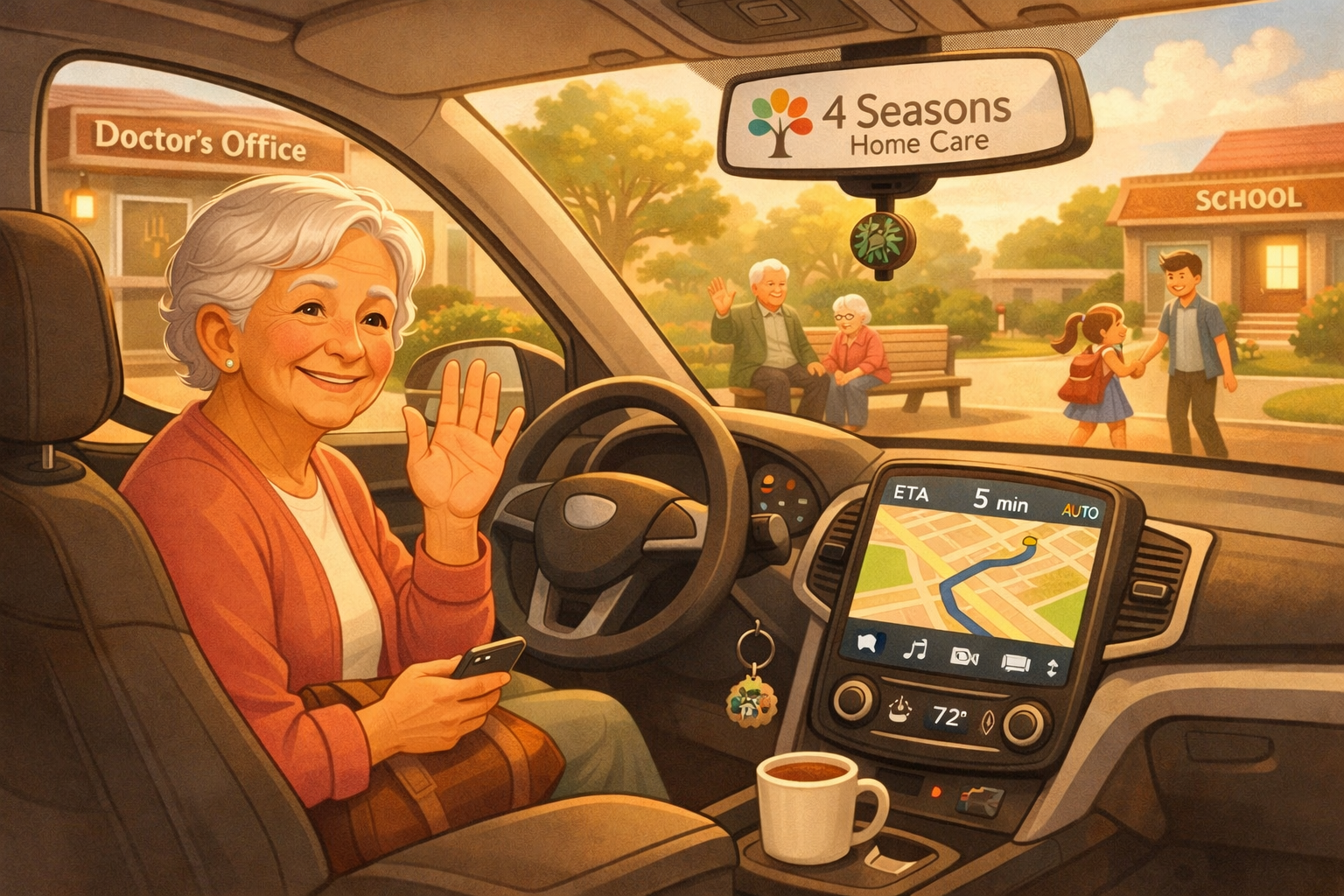
This is where the game really changes. Services like Waymo operate cars with no one behind the wheel. The senior becomes a passenger in their own trip. They can ride to a doctor's appointment, a grandchild's school play, or a coffee date with a friend, all without asking anyone for a favor and without putting themselves or others in danger.
In the Atlanta metro area, Waymo has been expanding rider access in partnership with Uber. That means an older adult with a smartphone can already hail a fully autonomous ride in parts of the city.
How Autonomous Vehicles Help Older Adults
The benefits go deeper than convenience. Transportation is one of the biggest predictors of quality of life in later years. When seniors lose access to reliable rides, a cascade of other problems tends to follow.
Independence without risk
A self-driving car lets an older adult travel on their own schedule, to their own destinations, without the physical or cognitive demands of driving. The freedom of the keys remains. The danger doesn't.
Less social isolation
Loneliness has been linked to higher rates of depression, dementia, and heart disease. When seniors can easily visit friends, attend church, or meet family for lunch, their social world stays intact.
Better access to healthcare
Missed medical appointments are a major cause of avoidable hospital visits. An on demand autonomous ride makes it far easier to keep up with checkups, physical therapy, and prescription pickups.
Safer for everyone on the road
According to the National Highway Traffic Safety Administration, drivers age 80 and older have higher fatal crash rates per mile than any group except teenagers. When those miles shift to software that never gets tired, never checks a phone, and never has a bad day, the whole road gets a little safer.
"The question is no longer when should mom stop driving. It's when should mom stop being the driver. Those are very different conversations." - Dr. Lisa Ng, geriatric care specialist
That shift matters. Families used to face a stark either or choice. Now there's a real middle path.
When Technology Is Not Enough
Self-driving cars are a remarkable tool, but they aren't a cure all. A few realities worth keeping in mind.
Coverage is still limited
Fully autonomous ride services operate in specific cities and service areas. If a loved one lives in a rural part of Georgia, the ride options may still be thin. Always check local availability before counting on it.
Smartphone skills matter
Most autonomous services are hailed through an app. Seniors who aren't comfortable with smartphones may need a little setup help, or a family member who can request the ride on their behalf.
Some trips still need a human
A robotaxi can drop someone at the pharmacy. It can't carry the groceries inside, remind them to take their medication, or notice that something seems off today. Those moments still need a person.
Cognitive decline changes the picture
If a senior is living with advanced dementia, even sitting in a self-driving car alone may not be safe. A family member, companion, or caregiver should plan to ride along.
Making a Gentle Transition
The conversation about driving doesn't have to be a one time ultimatum. A phased approach tends to work much better.
Start with a frank check in
Ask your loved one how they feel behind the wheel lately. Many seniors are already worried and relieved to talk about it.
Get a professional assessment
A certified driving rehabilitation specialist can give an honest, respectful evaluation of current skills. Sometimes the answer is a few adjustments, not full retirement from driving.
Mix and match transportation
An older adult doesn't have to pick one mode of transport for life. Many families find the sweet spot in a blend of short local drives during the day, rides with family on weekends, and autonomous or rideshare trips for longer or nighttime outings.
Practice with the technology early
If a self-driving ride might become part of the routine, take a test ride together before it's needed. Familiarity takes away the intimidation factor.
How 4 Seasons Home Care Fits In
Technology can handle the miles. It can't replace the human side of aging well at home. That's where we come in.
At 4 Seasons Home Care, our caregivers support older adults across the Atlanta area with companionship, personal care, medication reminders, meal preparation, light housekeeping, and transportation assistance. When a loved one is ready to let go of the keys, we help fill the gap in a way that feels like family, not a service.
A self-driving car can take your mom to her appointment. Our team can greet her at the door, help her get ready, ride along if she prefers company, and make sure she gets home safely with dinner on the table. It's the best of both worlds, modern independence and a steady human hand.
If you're navigating questions about driving, independence, or daily support for a parent or spouse, we're glad to talk it through. Reach out to 4 Seasons Home Care for a free in home consultation, and we'll help you build a plan that fits your family.